Port Harcourt, Rivers State | August 2026
The reported emergence of Dutchford Exploration and Production Company Limited as the successful bidder for the Yorla South oil field in Khana Local Government Area of Ogoniland is a deeply disturbing development that must not become another chapter in the Niger Delta’s long history of environmental destruction and human rights violations.
We are unequivocal: DO NOT REOPEN THE WELLS. Decommission them. Clean them up. Restore the land. Protect the people. Ogoniland has suffered enough.
For decades, the Ogoni people have carried the burden of an oil economy that extracted wealth from their land while leaving behind poisoned soil, contaminated water, degraded ecosystems, gas flaring and a legacy of conflict. The answer to this history is not to reopen old wells and begin another cycle of extraction. The answer must be restoration.
The reported resumption of oil in Yorla South oil field comes despite the historic findings of the United Nations Environment Programme (UNEP), which documented extensive contamination across Ogoniland and called for comprehensive remediation. How can the government contemplate new oil production in Ogoni when the environmental wounds of previous production remain unhealed? This is not development. It is a dangerous attempt to turn an unresolved disaster into a new oil frontier.
OGONILAND IS NOT AN EMPTY OIL FIELD
Behind every oil licence is a community — farms, rivers, creeks, mangroves, fishing grounds, homes and ancestral lands. The memory of Ken Saro-Wiwa and the eight Ogoni activists executed in 1995 is a powerful reminder that this struggle has always been about dignity, survival, justice and the right of a people to determine what happens to their homeland. We cannot honour that history by reopening wells whose environmental legacy remains unresolved, and we cannot allow the pursuit of petroleum revenue to again take precedence over human life and environmental protection.
THE KPEAN SPILL: A DISASTER STILL UNFOLDING
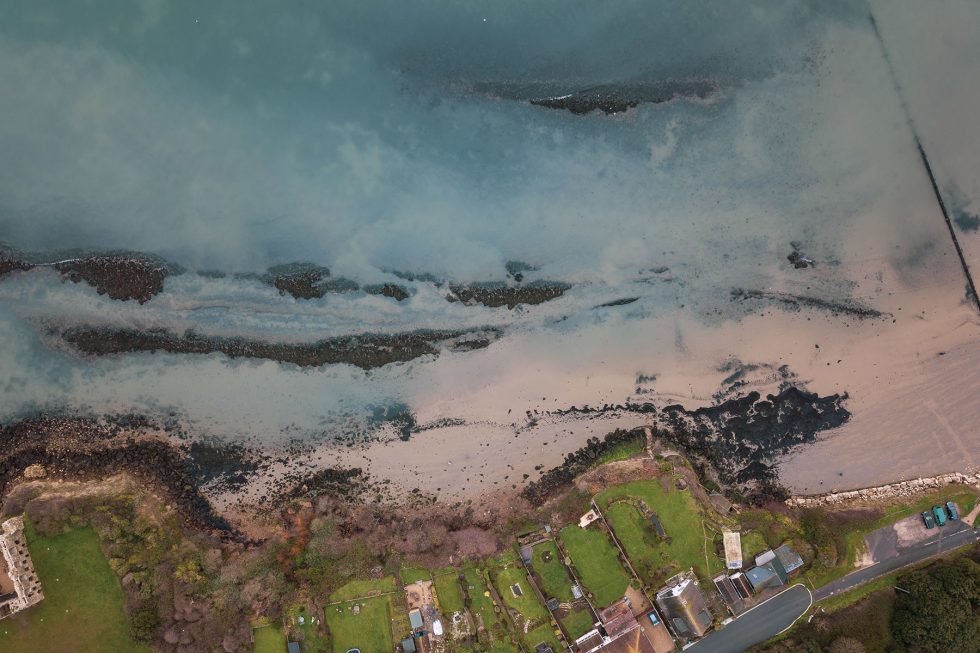
This is not a hypothetical concern. Kpean, the community that hosts fourteen of Yorla’s oil wells, is living through an unresolved oil disaster right now. In August 2025, crude escaped from a decades-old wellhead dormant since 1993 and spread into farmland, streams and drinking-water sources. A further spill months later destroyed still more farmland. Months on, Kpean has received no meaningful clean-up: farmland can no longer be cultivated, rivers can no longer be fished or drunk from, and residents describe unexplained illness and death among people and livestock.
Resuming production at Yorla South in this context is an affront to Kpean and to the environment. It would:
● Reactivate a field whose existing infrastructure has already spilled crude onto Kpean’s land, without that damage being remediated;
● Ask a community still living with contaminated water and sickness to accept renewed extraction before receiving clean-up, compensation or healthcare;
● Pressurise wellheads already failing from age and corrosion, multiplying the risk of further blowouts and leaks;
● Treat Kpean’s ongoing suffering as an acceptable cost of doing business; and
● Repeat, in real time, the very pattern this statement warns against — extraction first, restoration never.
No licence should be permitted to advance until Kpean’s spill has been fully investigated, cleaned up and its people made whole.
NO NEW ORORO-1, NO OKRIKA FLAMES, NO BILLE GAS POLLUTION
The Niger Delta has seen what happens when warnings are ignored. The Ororo-1 well disaster in Ondo State, an uncontrolled source of hydrocarbon pollution after a blowout, is a warning about the consequences of poorly managed, ageing and abandoned infrastructure — Ogoniland must not be given its own Ororo-1. No new abandoned wells. No new uncontrolled hydrocarbons. No new environmental liabilities passed from one generation to another.
The flames of Okrika and other oil-producing communities are not symbols of development to those who live beneath them — they represent years of exposure to pollution, heat and hazardous emissions. We reject any return to a production model that treats communities as sacrifice zones. And the experience of Bille and other riverine communities is a further warning: the Niger Delta’s creeks and waterways are not industrial drains but sources of food, culture, livelihood and life. There must be no new gas flaring, no routine venting, and no new Bille-style hydrocarbon pollution in Ogoniland.
OGONILAND NEEDS CLEAN-UP, NOT NEW OIL
If the Federal Government is genuinely committed to the people of Ogoni, its priority must be unmistakable: clean up Ogoniland, restore the creeks, remediate contaminated soil, protect community health, restore livelihoods, and hold polluters accountable. Before anyone talks of producing another barrel of crude from Ogoniland, government must demonstrate that it has dealt honestly with the pollution and environmental liabilities left by previous petroleum operations. A credible future for Ogoniland cannot be built on contaminated soil.
WE DEMAND A MORATORIUM ON NEW PRODUCTION
If the reported Yorla South award is confirmed, we demand an immediate moratorium on any attempt to recommence production until there has been:
● A full and independent assessment of the environmental condition of the Yorla South field and surrounding communities;
● Immediate and full remediation of the ongoing Kpean oil spill, including compensation and healthcare support for affected residents;
● Public disclosure of the licence, ownership structure, development plans and environmental obligations attached to the asset;
● Comprehensive environmental and social impact assessments, and genuine, meaningful consultation with affected Ogoni communities;
● Independent assessment of existing infrastructure and abandoned wells, and a clear decommissioning and remediation plan for legacy infrastructure;
● Resolution of outstanding legal and community disputes;
● Transparent environmental monitoring with results publicly accessible to communities; and
● A legally enforceable framework establishing responsibility for present and historical environmental liabilities.
Community consultation must not be a ceremonial exercise conducted after decisions have already been made. The people whose land is being licensed must have a meaningful voice in determining what happens to that land.
OGONIZE AND YASUNIZE: OGONILAND’S PLACE IN A GLOBAL MOVEMENT
Oilwatch International, together with the Health of Mother Earth Foundation (HOMEF) and allies across the globe, has called on the world to “Ogonize and Yasunize” — to draw on the example of the Ogoni people, who forced a halt to oil extraction in their territory in 1993, and the people of Ecuador, who voted in 2023 to keep the oil of Yasuni’s Ishpingo-Tambococha-Tiputini fields in the ground. To Ogonize and Yasunize is to defend territories of ecological and cultural importance from extraction, to reject the idea that frontline communities must be sacrificed for fossil fuel revenue, and to insist that some places are simply too precious to exploit.
Any attempt to reopen the Yorla wells would not only reverse three decades of Ogoni resistance — it would undermine a movement now inspiring communities from Uganda to Namibia to Brazil to say no to fossil extraction on their own land. Ogoniland must remain what it has become: proof that a people can stop an oil economy and demand restoration instead. We call on government, industry and the international community to Ogonize and Yasunize Ogoniland — to keep Yorla’s oil in the ground and invest instead in genuine clean-up and restoration.
OGONI MUST NOT BE SACRIFICED FOR ANOTHER BARREL
We reject the argument that Nigeria’s economic difficulties justify reopening environmentally compromised oil fields at any cost. Revenue without environmental responsibility is simply deferred disaster. Ogoniland is watching. Civil society is watching. The environmental rights movement will continue to document, expose and challenge any attempt to sacrifice the rights of Ogoni people for short-term petroleum interests. We therefore say, clearly and without equivocation:
DON’T REOPEN THE WELLS. DECOMMISSION THEM. CLEAN UP OGONILAND. CLEAN UP KPEAN NOW. RESTORE THE LAND AND WATER. NO NEW ORORO-1. NO OKRIKA FLAMES. NO BILLE GAS POLLUTION. OGONIZE AND YASUNIZE OGONILAND.
NO NEW ENVIRONMENTAL GENOCIDE IN OGONI.
Ogoniland has given enough. Its people have suffered enough. Its rivers have carried enough oil. Its soil has absorbed enough poison. The future of Ogoniland must not be another oil boom — it must be a restoration boom. Ogoniland does not need another barrel of crude. Ogoniland needs justice.
Signed and Strongly Endorsed by
1. Oilwatch International
2. Health of Mother Earth Foundation (HOMEF)
3. Quest for Growth and Development Foundation
4. Rights Advocacy and Development Centre – RADEC
5. Oilwatch Africa
6. Lekeh Development Foundation
7. The Young Environmentalist Network (TYEN)
8. No REDD in Africa Network(NRAN)
9. Centre for environmental research and Agricultural innovations (CERAI)
10. Fishers Development Network
11. Environment Rights Action/Friends of the Earth Nigeria (ERA/FoEN)
12. Oilwatch Ghana
13. Safe Space Development Foundation
14. Centre for Citizens Conserving Environment & Management (CECIC)
15. Kouga Community Development Forum
16. Corporate Accountability and Public Participation Africa (CAPPA)
17. HOMEF South Sudan
18. FishNet Alliance Network
19. Peace Point Development Foundation –PPDF
20. Rooted Rising Initiative
21. Society for Women and Youth Affairs (SWAYA)
22. Climáximo
23. Centre pour la Justice Environnementale – Togo
24. AICED RDC
25. Magamba Network
26. Youth for Environmental Sustainability and Development (YESD)
27. Policy Alert
28. Connected Advocacy
29. Kallop Humanitarian and Environmental Centre
30. ROSA LUXEMBURG STIFTUNG WEST AFRICA
31. Hope for Tomorrow Initiative (HOFTI Centre)
32. International Climate Change Development Initiative
33. Jeunes Volontaires pour l’Environnement Benin (JVE BÉNIN)
34. Réseau des OSC béninoises pour le Développement des Energies Renouvelables (RODER BENIN)
35. Global Network of Civil Society Organization for Disaster Risk Reduction (GNDR) in Bénin
36. Youth Coalition for Climate Adaptation (YC4CA)
37. Rainbow Watch and Development Centre
38. Social Development Integrated Centre – Social Action
39. Oficina de Derechos de la naturaleza
40. The Greenheart Movement
41. Voices for Change
42. Cosmopolíticas
43. Coalition Nationale pour la Justice Climatique au Bénin (CNJC Bénin)
44. CRADHE Chad
45. Amazon Watch
46. Vamos Por los Derechos Bogotá
47. Laudato Si’ Movement
48. Kebetkache Women Development and Resource Centre
49. Oilwatch Nigeria
50. We the People
51. Speak up Now Initiative (SUNI)