gallery
Quién está
We have 36 guests online
Username

Password

Remember me
Forgotten your password?
Visitors: 2163126
Divide and rule: the politics of climate change negotiations
The stakes
The IPCC has confirmed that the Earth has a limited capacity to absorb greenhouse gas emissions (i.e. a limited “emission or carbon budget”). Senior economists have confirmed that this budget could be worth in excess of one trillion US dollars annually.i Negotiations over a global goal and mitigation commitments are addressing how to share this limited atmospheric resource between rich and poor nations. At stake in the climate negotiations, therefore, is among the largest divisions of wealth and resources in modern history.

Annex I countries have already used more than their fair share of this budget, and have long understood what’s at stake in the negotiations. They seek to continue their over-use of a shared resource by securing substantial “assigned amounts” of emissions based on their high historical levels, while locking the South into considerably lower and declining per-capita levels. 

Non-Annex I countries are rapidly beginning to understand the implications of an unjust distribution of the remaining atmospheric space, and of the financing and technology required to live well within its constraints. A number of countries have called for more equitable approaches taking into account historical responsibility, an equitable allocation of a shared atmospheric resource, per-capita accumulative emission levels, and the climate debt owed by developed countries to developing countries for their over-use of shared atmospheric space (“emissions debt”) and for the devastating consequences of climate change on developing countries (“adaptation debt”).
Last Updated ( 16 June 2009 )
Read more...
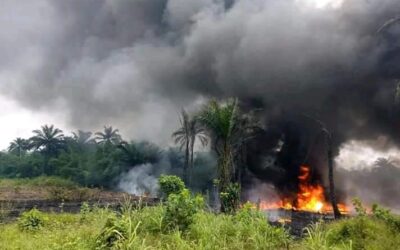
Nigeria: No More Oil Blocks! Let’s leave the oil under the Ground
As the Niger Delta boils and as Nigeria looks towards a bleak future with diminished oil revenues, the oil corporations operating in Nigeria continue to garner obscene profits. This happens because the corporations are not paying for environmental costs of their operations and because ecological debts go unattended to. Local communities have shouldered the burdens while the corporations laugh all the way to the banks secured by their opaque Joint Venture agreements.
The trend of profits made by oil companies over the past couple of years are very telling. These companies reap profits in the face of whatever woes the world is confronted with.
Last Updated ( 11 February 2009 )
Read more...
Radical new agenda needed to achieve climate justice

Poznan statement from the Climate Justice Now! coalition
12 December 2008

Members of Climate Justice Now! – a worldwide alliance of more than 160 organisations -- have been in Poznan for the past two weeks closely following developments in the UN climate negotiations.

This statement is our assessment of the Conference of Parties (COP) 14, and articulates our principles for achieving climate justice.

Last Updated ( 15 December 2008 )
Read more...
Carbon Neutral Magicians
Carbon_neutral.jpgWRM Monthly review
Being “carbon neutral” has become fashionable. The World Bank, the Vatican, the World Olympics, the Football World Cup, the Body Shop, the Rolling Stones, and a long list of celebrities proclaim themselves to be totally or partially “carbon neutral”. Even
Mercedes Benz held in California what was described as “the world’s first ever carbon neutral fashion week”! It is therefore
understandable that the New Oxford American Dictionary proclaimed "carbon neutral" as its Word of the Year in 2006.

The “offsetting” myth

One must acknowledge that being “carbon neutral” sounds good – and that some of those mentioned above honestly believe to be doing the right thing- because it gives the impression that “neutral” is synonymous to not emitting carbon dioxide at all. However, the concept hides a dangerous cheating game, where many corporate players are winning, while the Earth’s climate is losing.
Last Updated ( 10 November 2008 )
Read more...
Blocking Freedom
bf.jpgCHINA’S EXPANDING OIL VENTURES FUEL ANGER IN WESTERN BURMA.

New York and Hong Kong Stock Exchange-listed CNOOC behind series of abuses on oil exploration project, says report

BANGKOK – An unregulated scramble for oil and gas by Chinese companies in Burma is exacerbating poverty and creating a potential environmental and security flashpoint that could have repercussions throughout the region, a study released today revealed.

“Blocking Freedom”, a damning new report by environmental and human rights group Arakan Oil Watch said that Chinese companies have been working together with Burma’s military regime to confiscate land and farms, and damage crops and destroy livelihoods by polluting soil and waterways as they search for the oil that will fuel China’s economic development.

“Corporations and their supporting governments engaged in the oil and gas sector in Burma must ensure they follow international standards on local people’s rights, and ensure environmental and revenue transparency,” said Jockai Khaing, director of Arakan Oil Watch. “Until then, we are demanding that they stop oil and gas exploration in Burma.”
Last Updated ( 27 October 2008 )
Read more...
The voluntary carbon market
Oilwatch position paper on the voluntary carbon market.
Download the position paper in PDF Download the position paper in PDF (116.94 KB)


Last Updated ( 10 September 2008 )
Read more...
<< Start < Prev 1 2 Next > End >>

Results 1 - 11 of 14
Copyright 2005 Oilwatch